- This Week in History
- Posts
- This Week in History #1
This Week in History #1
December 20, 2024 - December 26, 2024
Welcome to this week’s edition of This Week in History! While the world of news and current events swirls around us, it is important to look back and reflect on events of the past. Each week, we will curate historical events that resonate with our world today and deep dive on events that have happened in history in bygone weeks!
Sign up to receive this newsletter in your inbox every Friday.
December 20, 1803: The Louisiana Purchase is Complete
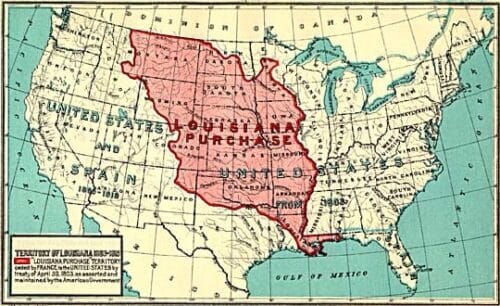
Figure 1: Map of the Continental United States with Louisiana purchase highlighted.
In a ceremony held in New Orleans, the government of the United States of America led by then Secretary of State James Madison completes the Louisiana purchase from the French First Republic, acquiring lands of the Mississippi River Basin for $15 million dollars or $18/square mile.
Notable Events:
1192: Richard I of England is imprisoned by Leopold V of Austria on his way back home from the Third Crusade.
1334: Cardinal Jacques Fournier is elected Pope Benedict XII.
2007: Queen Elizabeth II surpasses Queen Victoria in becoming the oldest monarch in history (81 years, 243 days).
2019: The United States Space Force is established.
December 21, 1620: Mayflower Pilgrims Reach Plymouth County
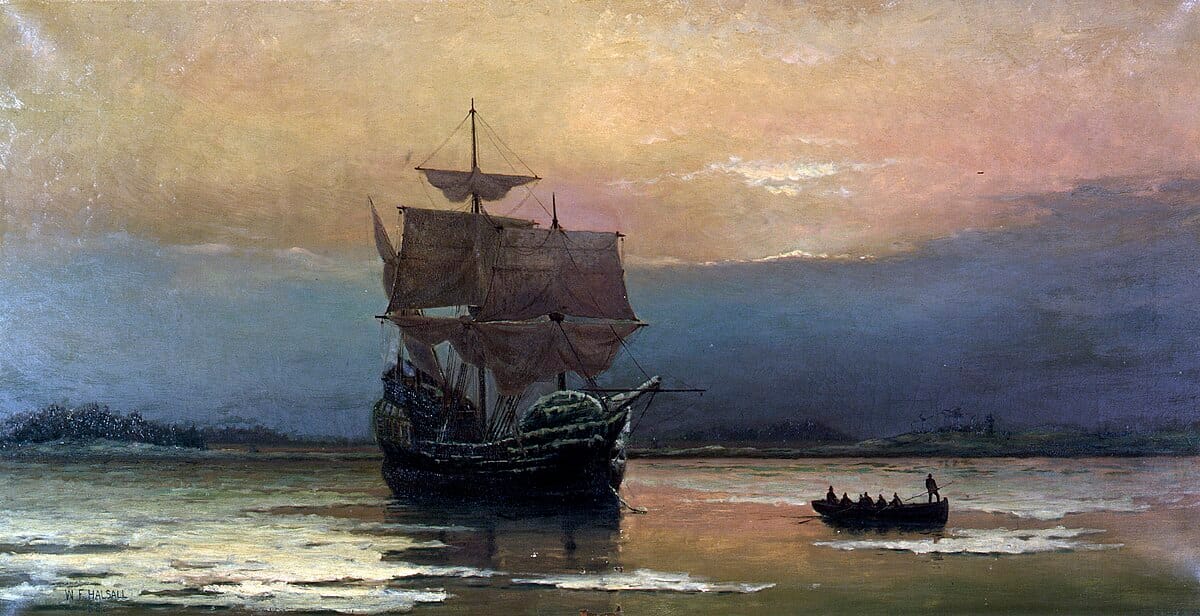
Figure 2: The Mayflower in Plymouth Harbor
The Mayflower pilgrims land near Plymouth Rock in Plymouth County, led by William Bradford, who went on to become the 2nd, 5th, 7th, 9th and 11th Governor of Plymouth Colony. Of the 100+ pilgrims who embarked on the journey, only 30 reached the New World to establish one of the key founding colonies of European settlement in the Americas.
Notable Events:
69: The Roman Senate declares Vespasian as Emperor of Rome, the last to be named in the Year of the Four Emperors.
1937: The world’s first feature length animated movie, Snow White and the Seven Dwarves, premieres at : Circle Theatre.
2020: Great conjunction of Jupiter and Saturn occurs, where the planets are separated in the sky by only 0.1 degrees, a first since 1623.
December 22, 1808: Ludwig Van Beethoven debuts 5th, 6th Symphonies & 4th Piano Concerto.

Figure 3: Ludwig Van Beethoven composing by candlelight.
Ludwig Van Beethoven conducts and performs a concert at the Theater an der Wien in Vienna, Austria, premiering the Fifth Symphony, Sixth Symphony, Fourth Piano Concerto and Choral Fantasy.
Listen to the famous Fifth Symphony in C Minor:
December 23, 1954: First Successful Kidney Transplant is Performed

Figure 4: Operating room during the kidney transplant.
J. Hartwell Harrison, a urologic surgeon and descendant of Founding Father of the United States Benjamin Harrison (and Abraham Lincoln) and Joseph E. Murray, a plastic surgeon popularly known as the “father of transplantation” perform the world’s first successful kidney transplant at Brigham Hospital between two twins. For this and later work, Murray received the Nobel Prize for Medicine in 1990.
Notable Events:
1815: Jane Austen publishes her novel Emma, which has been adapted into a number of films, TV shows and stage plays.
1970: The North Tower of the World Trade Center in Manhattan, NY is completed, becoming the tallest building in the world at 417m (1,368 ft).
1979: In the ongoing Soviet-Afghan War, the Soviet Armed forces occupy Kabul, the capital of Afghanistan.
December 24, 1826: The Eggnog Riot Begins at the United States Military Academy at West Point

Figure 5: The United States Military Academy at West Point
Sometimes known as the Grog Mutiny, the Eggnog Riot took place at the United States Military Academy at West Point, NY involving more than one-third of cadets by the time it ceased the following day. The riot was caused by a drunken Christmas party where a large quantity of whiskey was smuggled in to make eggnog. Among the rioters was future President of the Confederated States, Jefferson Davis.
Notable Events:
1500: A joint Venetian-Spanish fleet captures the Castle of St. George on the island of Cephalonia.
1818: The first performance of “Silent Night” takes place in Austria.
1924: Albania becomes a republic.
1951: Libya becomes independent and Idris I is proclaimed King of Libya.
December 25, 1066: William the Conqueror is crowned King of England.

Figure 6: The coronation of William of Normandy at Westminster Abbey.
On the basis of his ties to Edward the Confessor, Duke William of Normandy crossed the English channel and defeated the warring factions led by his brother-in-law Harold Godwinson and Norwegian King Harold Hardrada to be crowned King of England at Westminster Abbey, completing the Norman conquest of England.
Notable Events:
800: Charlemagne is crowned Holy Roman Emperor in Rome.
1013: Sweyn Forkbeard takes control of the Danelaw and is proclaimed King of England.
2021: The James Webb Telescope is launched.
December 26, 1991: The Soviet Union is Dissolved
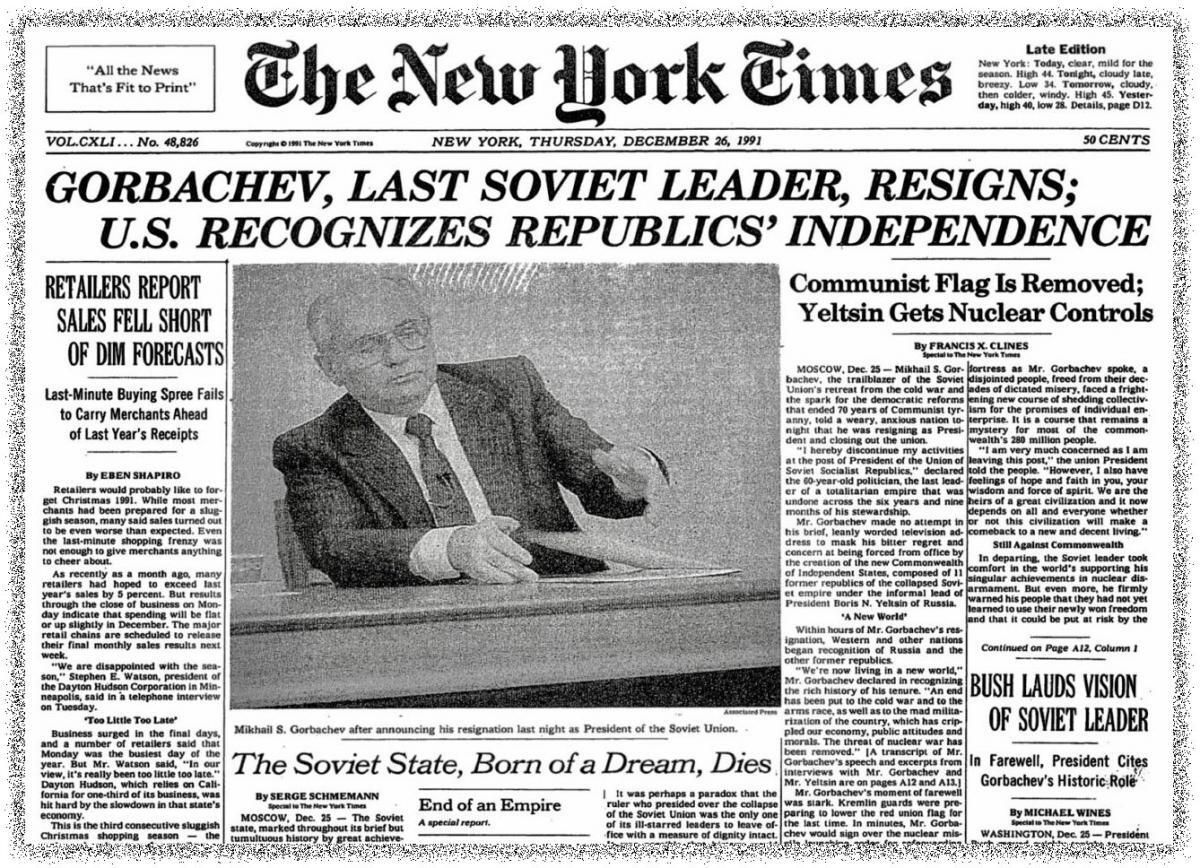
Figure 7: Front page of the New York Times on December 26, 1991
The Supreme Soviet of the Soviet Union, the highest body of state authority, meets and formally dissolves the Soviet Union, ending the Cold War. The dissolution led to the creation of 15 independent republics, with Russia as the largest successor state. It triggered significant geopolitical shifts, including the decline of communist influence globally and the expansion of Western institutions like NATO and the EU into former Soviet territories.
Notable Events:
1898: Marie & Pierre Curie isolate radium.
1919: Babe Ruth is traded from the Boston Red Sox to the New York Yankees.
1963: The Beatles release “I want to hold your hand” and “I saw her standing there” in the United States.
Thank you for reading! See you next Friday This Week in History #2!