- This Week in History
- Posts
- This Week in History #2
This Week in History #2
December 27, 2024 - January 2, 2025
Welcome to this week’s edition of This Week in History!
Sign up to receive this newsletter in your inbox every Friday @ 12PM EST.
December 27, 1831: Charles Darwin embarks on his journey aboard the Beagle

The HMS Beagle in the Straits of Magellan in Chile
Charles Darwin embarks on a 5-year journey on the HMS Beagle under command of Vice-Admiral Robert FitzRoy. At the age of 22, Darwin sought to see the tropics before joining the church as a pastor. After circumnavigating the Earth while conducting surveys on the coasts of South America, Tahiti and Australia, Darwin published The Voyage of the Beagle garnering wide renown as a writer and created the basis for his theory of evolution by natural selection.
Notable Events:
537: The Hagia Sophia (Turkish: Ayasofya) is completed in Constantinople (Istanbul) by Eastern Roman Emperor Justinian I.
1922: Japan builds the world’s first purpose built aircraft carrier, Hōshō (rough translation: flying phoenix).
1978: Spain becomes a democracy after 40 years of dictatorship under Francisco Franco.
December 28, 1944: Maurice Richard becomes the first player to score 8 points in a game of NHL ice hockey

Maurice Richard scores one of his 544 career goals against the Toronto Maple Leafs.
Maurice “Rocket” Richard, becomes the first player in National Hockey League (NHL) history to score 8 points in a single game; scoring 5 goals and 3 assists during a game against the Detroit Red Wings at the Montreal Forum. Richard would continue his dominance through the 1940s, scoring 50 goals in the 1944-45 hockey season and leading the Montreal Canadiens to multiple Stanley Cup wins.
Notable Events:
1065: Edward the Confessor, King of England consecrates Westminster Abbey.
1795: Construction begins for Yonge Street in York, Upper Canada (modern day Toronto), formerly the longest street in the world.
1846: Iowa is admitted as the 29th US state.
December 29, 1845: The United States of America annexes the Republic of Texas
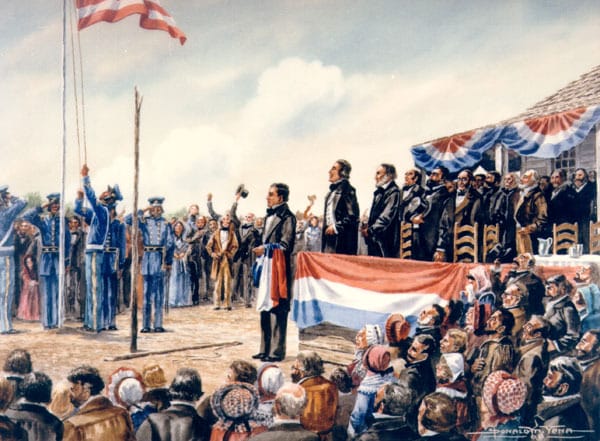
The annexation ceremony of Texas to the Union.
The Republic of Texas is annexed into the United States of America and admitted to the Union as the 28th State. The Republic of Texas had declared independence from the Republic of Mexico on March 2, 1836 and applied for annexation by the US in the same year. The annexation provided significant legal precedent for the future annexation and admittance to the Union of Hawaii on August 12, 1898.
Notable Events:
1911: Mongolia gains independence from the Qing Dynasty of China.
1940: The German Luftwaffe (Air Force) fire-bombs London, causing the Second Great Fire of London.
December 30, 1916: Grigori Rasputin is assassinated in Petrograd, Russia

Portraits of Tsar Nicholas II (left), Grigori Rasputin (centre) and Tsarina Alexandra (right).
Grigori Rasputin, the infamous spiritual advisor to Tsar Nicholas II and Tsarina Alexandra of Russia is assassinated by Prince Felix Yusupov to end his destabilizing influence on Russian court politics after World War I. Rasputin’s death further destabilized the monarchy, highlighting internal divisions in the Russian royal and political elite, acting as a key input to the February Revolution of 1917 that toppled the Romanov dynasty; paving the way for the creation of the Union of Soviet Socialist Republics (USSR) in 1922.
Notable Events:
1419: The Battle of La Rochelle (part of the Hundred Years’ War) begins.
1922: The Union of Society Socialist Republics (USSR) is formed.
2006: Former President of Iraq, Saddam Hussein is executed.
December 31, 1759 : Arthur Guinness begins brewing Guinness beer
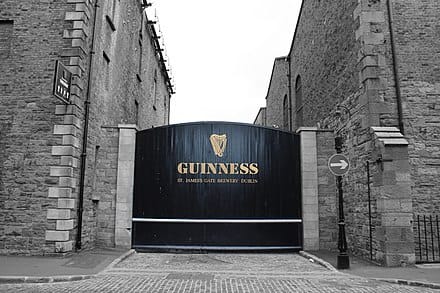
Guinness factory gate on Crane Street in Dublin, Ireland.
Arthur Guinness signs a 9,000 year lease at 45 GBP per annum in Dublin, Ireland gaining exclusive use of the site for brewing and access to water rights in springs nearby. Initially brewing ale, which was popular in Ireland at the time, Arthur soon shifted to producing porter, a dark beer style gaining popularity across Ireland and the United Kingdom (and later, the world). The Guinness stout with its iconic dark colour and creamy texture is now one of the most recognizable beers and brands globally.
Notable Events:
1600: The British East India Company, which would go on to control the Indian subcontinent as the British Raj until 1947, is chartered.
1831: Gramercy Park is deeded to New York City.
1857: Queen Victoria chooses Ottawa as the capital of Canada.
January 1, 1776: General George Washington hoists the first US Flag at Prospect Hill
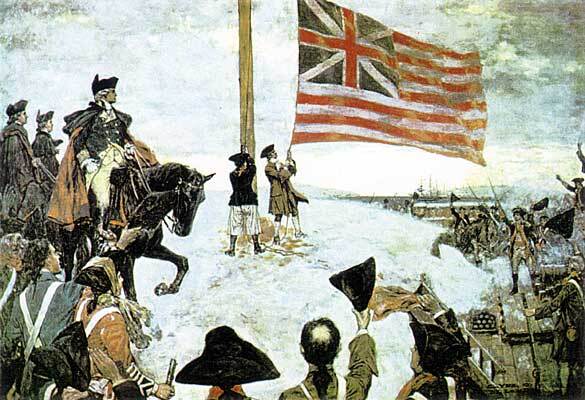
General George Washington overlooks the hoisting of the Continental Union Flag.
General George Washington, later the first president of the United States of America, hoists the first US Flag (The Continental Union Flag) at Prospect Hill in Somerville, Massachusetts as a show of defiance against British Rule. The flag served as a rallying cry for the Continental Army, with the event at Prospect Hill being a bold declaration of the unity and determination of the United States against British colonial rule.
Notable Events:
1502: Present day Rio de Janeiro, Brazil is explored for the first time by the Portuguese.
1772: The first traveler’s cheques are issued by the London Credit Exchange Company.
1877: Queen Victoria is proclaimed Empress of India.
January 2, 1991: The Reconquista ends, consolidating Spanish Christian rule of the Iberian Peninsula
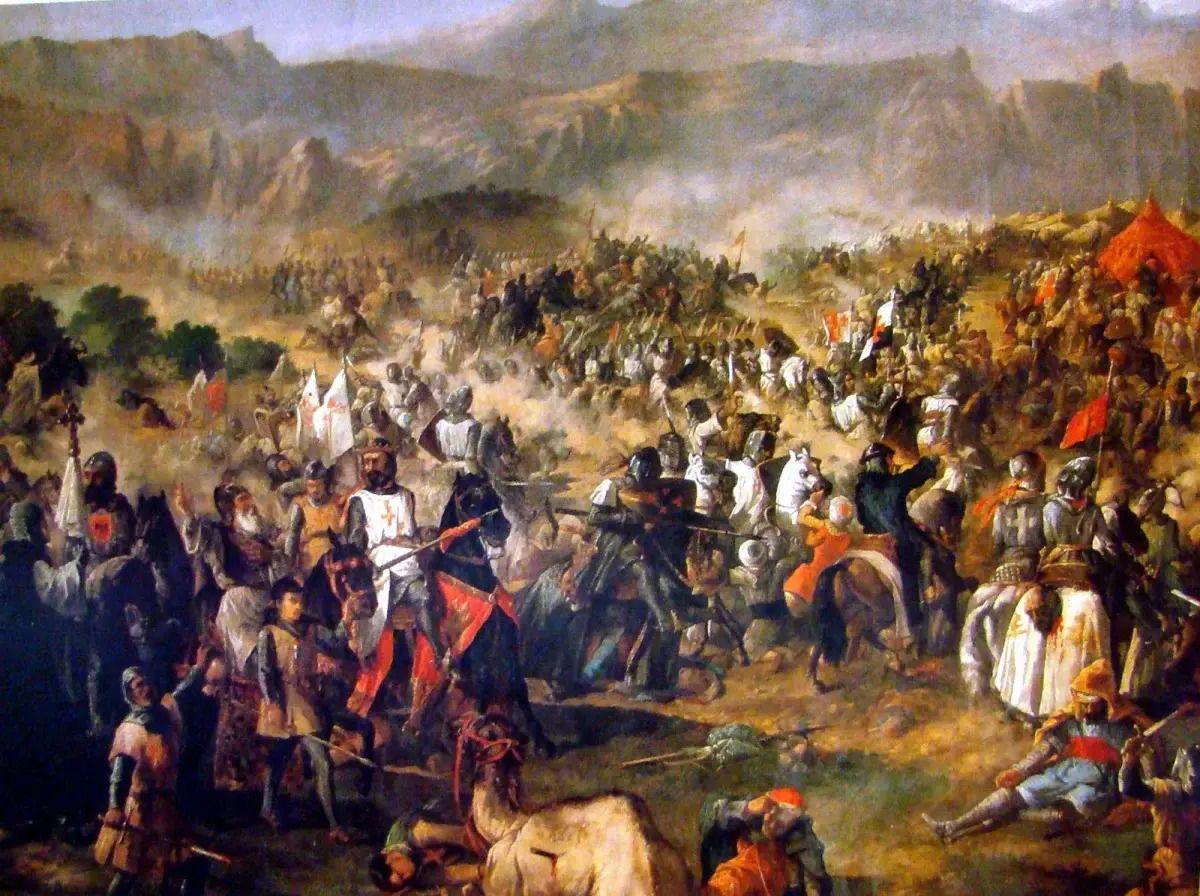
Battle of Las Navas de Tolosa, a significant event in the Reconquista.
The Reconquista or the Reconquest of al-Andalus was a series of military and cultural campaigns that European Christian Kingdoms waged against Muslim kingdoms in the Iberian Peninsula culminating in the reign of Catholic Monarchs Queen Isabella I of Castile and King Ferdinand II of Aragon (married in 1469) in Spain. On January 2, 1492, the Emirate of Granada, the last Muslim stronghold in Spain surrendered, ending the struggle. Significant cultural landmarks of the period include the Grand Mosque of Cordoba and the Alhambra Complex, garnering millions of visitors annually.
Notable Events:
533: Mercurius becomes Pope John II, the first pope to adopt a new name upon elevation to the papacy.
1942: The Federal Bureau of Investigation (FBI) obtains convictions of 33 members of the German Spy Ring, known as the Duquesne Spy Ring.
Thank you for reading - see you next Friday!