- This Week in History
- Posts
- This Week in History #10
This Week in History #10
February 21, 2025 - February 27, 2025
Welcome to this week’s edition of This Week in History!
Sign up to receive this newsletter in your inbox every Friday @ 12PM EST.
February 21, 1848: Karl Marx and Friedrich Engels publish The Communist Manifesto
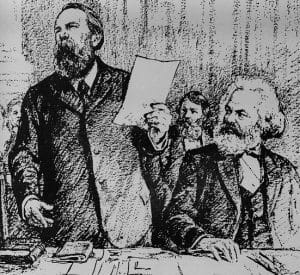
Karl Marx and Friedrich Engels at the Hague Congress
Karl Marx and Friedrich Engels published The Communist Manifesto as a response to the growing inequalities of industrial capitalism. The pamphlet outlined their theory of historical materialism, arguing that class struggle drives societal change and predicting the eventual overthrow of the bourgeoisie by the proletariat. It called for workers of the world to unite, emphasizing the abolition of private property and the establishment of a classless society. The manifesto became a foundational text for socialist and communist movements worldwide, influencing political thought and revolutions in the 19th and 20th centuries.
Seeking impartial news? Meet 1440.
Every day, 3.5 million readers turn to 1440 for their factual news. We sift through 100+ sources to bring you a complete summary of politics, global events, business, and culture, all in a brief 5-minute email. Enjoy an impartial news experience.
February 22, 1959: Lee Petty wins the first Daytona 500
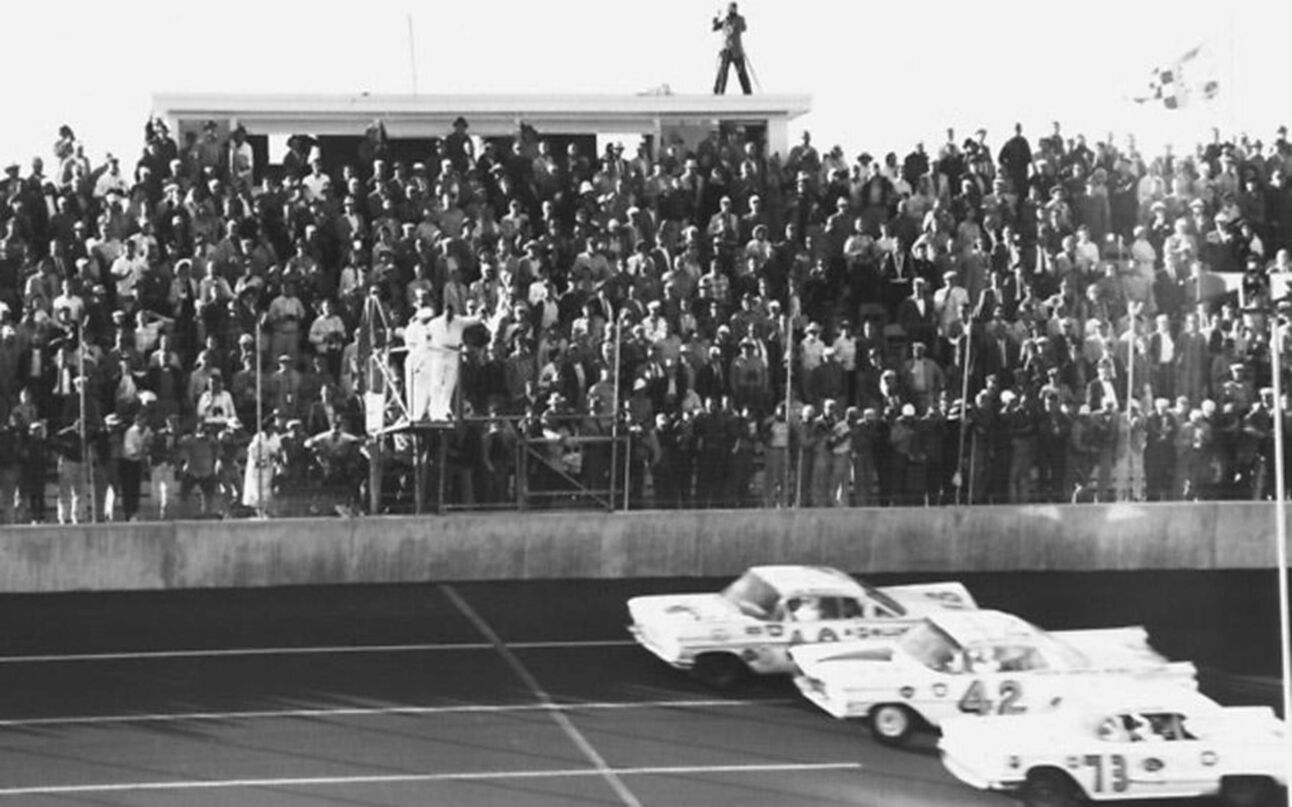
Photo finish at the 1959 edition of the Daytona 500
Lee Petty won the inaugural Daytona 500 in a dramatic photo finish, narrowly defeating Johnny Beauchamp after a controversial three-day review of the race results. The victory solidified Petty's status as one of NASCAR’s early legends and helped establish the Daytona 500 as the sport’s most prestigious event. His win also set the stage for the dominance of the Petty family in stock car racing, with his son Richard Petty later becoming a seven-time Daytona 500 champion.
February 23, 532: Emperor Justinian lays the foundation stone of the Hagia Sophia

Modern image of the Hagia Sophia
Emperor Justinian I ordered the construction of the Hagia Sophia in Constantinople (Istanbul) after the previous church was destroyed during the Nika Riots. Designed by mathematicians Anthemius of Tralles and Isidore of Miletus, the basilica featured an innovative dome structure that became a masterpiece of Byzantine architecture. It served as the world's largest cathedral for nearly a thousand years and later became a mosque after the Ottoman conquest in 1453. The Hagia Sophia remains one of the most iconic religious and architectural landmarks in history, now functioning as a mosque and museum in modern-day Istanbul.
February 24, 2008: Fidel Castro retires as President of Cuba

Fidel Castro smokes a cigar
Fidel Castro's retirement marked the end of an era in Cuban politics, as he had ruled the country since leading the Cuban Revolution in 1959. Under his leadership, Cuba became a one-party socialist state aligned with the Soviet Union during the Cold War, surviving U.S. embargoes and numerous assassination attempts. His policies drastically reshaped Cuban society, particularly in healthcare and education, while also drawing criticism for political repression and economic struggles. Even after stepping down, his influence remained strong, with his brother Raúl Castro continuing his legacy until broader reforms took shape in the following decade.
February 25, 1836: Samuel Colt obtains patent for signature revolver

Samuel Colt with signature revolver
Samuel Colt's patent for the revolver revolutionized firearms by introducing a mechanically rotating cylinder that allowed multiple shots without reloading. This innovation made firearms more efficient and reliable, significantly impacting military, law enforcement, and civilian use. Colt's design laid the foundation for the widespread adoption of revolvers, shaping the future of the firearms industry.
February 26, 1952: Vincent Massey is sworn in as first Canadian-born Governor General of Canada
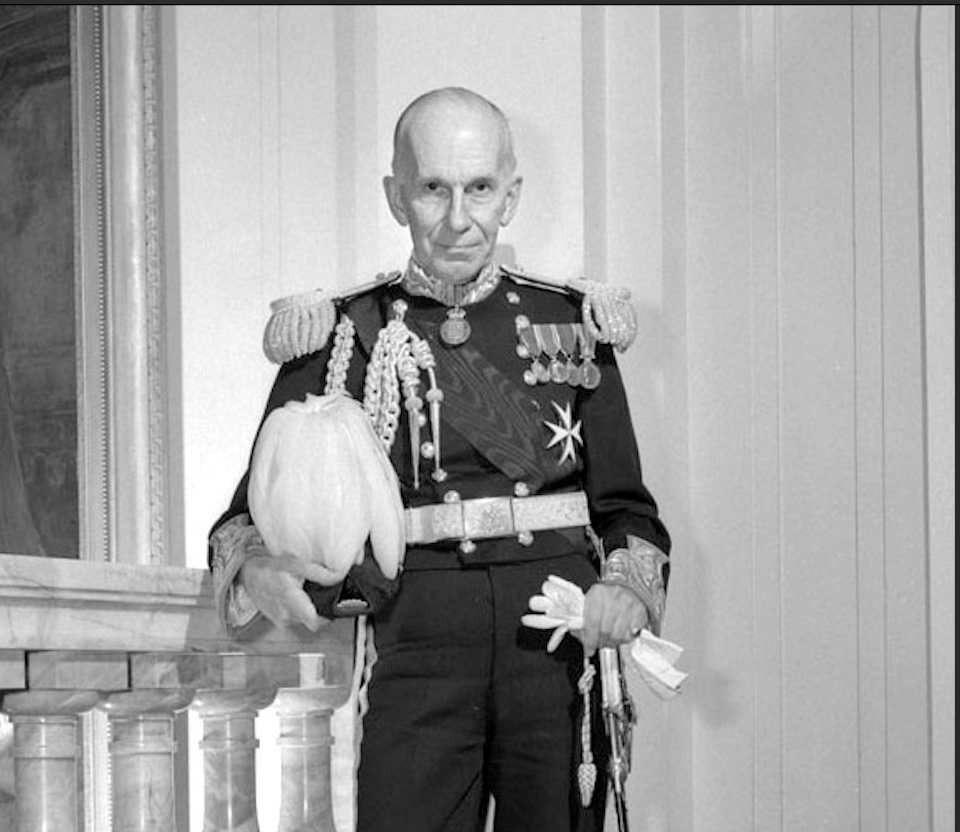
Official portrait of Vincent Massey
Vincent Massey's appointment as the first Canadian-born Governor General marked a shift away from the tradition of British appointees, reflecting Canada’s growing national identity. During his tenure, he championed Canadian arts, culture, and education, helping to establish institutions like the Canada Council for the Arts. His legacy influenced the modernization of the Governor General’s role, making it more representative of Canada's sovereignty.
February 27, 1964: Government of Italy asks for help in preventing Leaning Tower of Pisa from collapsing

Stabilization project for the Leaning Tower of Pisa
Concerned about the increasing tilt of the Leaning Tower of Pisa, the Italian government sought international assistance to stabilize the iconic structure. Engineers and experts from around the world collaborated on various solutions over the following decades, including soil extraction, counterweights, and cable supports. By 2001, a major stabilization project successfully reduced the tilt by about 17 inches (43 cm), ensuring the tower’s safety while preserving its historic lean. As a result, the tower remains a major tourist attraction and is expected to remain stable for at least 200 more years.
Thank you for reading - see you next Friday!