- This Week in History
- Posts
- This Week in History #3
This Week in History #3
January 3, 2025 - January 9, 2025
Welcome to this week’s edition of This Week in History!
Sign up to receive this newsletter in your inbox every Friday @ 12PM EST.
January 3, 1521 : Pope Leo X excommunicates Martin Luther

Excommunication of Martin Luther at the Diet of Worms
Pope Leo X, born into the prominent Medici banking family of Florence, was known in Protestant circles as associated with granting indulgences to those who donated to the reconstruction of St. Peter’s Basilica, a practice that Martin Luther challenged in his 95 Theses published in 1517. Though Martin Luther, ordained to Catholic priesthood, attempted to resolve differences amicably, Pope Leo X and Holy Roman Emperor Charles V rejected the Protestant Reformation, and condemned him as an outlaw at the Diet of Worms. As of 2024, over 80 million people follow Martin Luther’s teachings, organized under the Lutheran World Federation, which represents 149 member church bodies in 99 countries.
Notable Events:
1957: Hamilton Watch Company introduces the first electric watch.
1959: Alaska is admitted as the 49th US state.
2020: Iranian General Qassem Soleimani is killed by an American airstrike in Baghdad.
January 4, 2010: The current tallest building in the world, The Burj Khalifa officially opens in Dubai

The Burj Khalifa in Dubai, UAE
Topping out at 829.9 m or 2,722 ft, the Burj Khalifa has been the tallest building in the world since construction was completed in 2009, surpassing the Taipei 101 building, which had held this record since 2004. Named after the former president of the United Arab Emirates (UAE), the building was designed to be the centrepiece of a large mixed-use development project to further build and develop Dubai’s downtown core.
Notable Events:
871: Aethelred, King of Wessex (modern day southern England) is defeated by an invading Viking (Danish) army.
1918: The Finnish Declaration of Independence is recognized by Russia, Sweden, Germany & France.
January 5, 1972 : U.S. President Nixon announces the Space Shuttle Program.

Space Shuttle Atlantis in flight on December 2, 1988
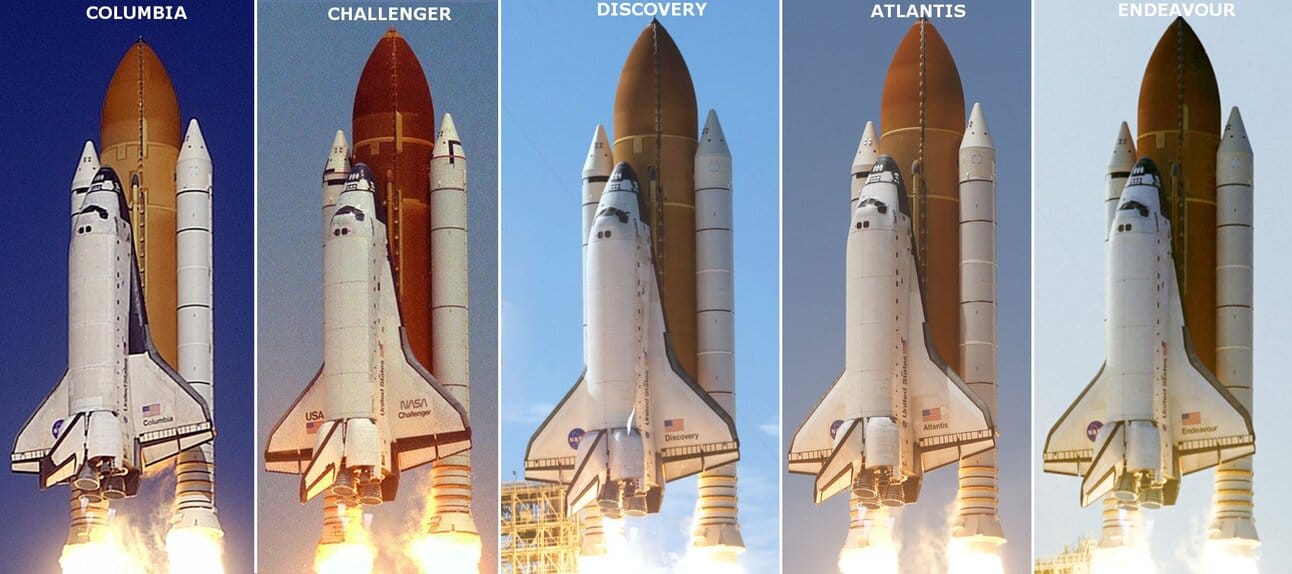
President Richard Nixon announces the Space Shuttle program to create a reusable spacecraft that would make space access more affordable and versatile. The shuttle was designed for various purposes, including satellite deployment, scientific research, and human spaceflight, emphasizing American leadership in space.
Space Shuttle launch profiles
Despite concerns over high costs and technical risks, NASA developed the system, which included an orbiter, an external fuel tank, and solid rocket boosters. The program, operational from 1981 to 2011, enabled significant achievements such as building the International Space Station and deploying the Hubble Space Telescope. Nixon's decision marked a shift from lunar exploration to a broader vision of reusable space technology.
January 6, 1947: Pan American Airlines offers the first round-the-world-ticket.

Pan American Airlines advertisement
Pan American Airlines, commonly known as Pan Am, was an airline that was the larges international air carrier and unofficial overseas flag carrier of the United States during much of the 20th century. It was one of the first airlines to fly worldwide and pioneered innovations such as jumbo jets and computer reservation systems. In 1947, Pan Am offered the first round-the-world ticket, enabling passengers to circumnavigate the globe on a single itinerary. This ticket type has maintained popularity and is still offered by many travel agencies and the Star Alliance airline network.
Notable Events:
1540: Henry VIII marries his 4th wife, Anne of Cleves.
1912: Geophysicist Alfred Wegener presents his theory on Continental Drift.
1929: Mother Teresa arrives by sea to Calcutta, India.
January 7, 1610: Galileo Galilei makes his first observation of the four “Galilean moons”

Composite image of Jupiter’s four Galilean moons
Galileo Galilei used a telescope to observe bright objects near Jupiter, which he initially thought were stars. Over subsequent nights, he realized they were moons orbiting the planet, later named the Galilean moons: Io, Europa, Ganymede, and Callisto.
This discovery provided key evidence against the geocentric (Earth is the center of the solar system with the sun orbiting around it) model of the universe, supporting the heliocentric (the sun is the center of the solar system) theory of Copernicus. Galileo's observations, published in Sidereus Nuncius, revolutionized astronomy and challenged prevailing views, marking a pivotal moment in the Scientific Revolution.
Notable Events:
49 BC: The Senate of Rome declares that Caesar will be a public enemy unless he disbands his army.
1782: The first American commercial bank, the Bank of North America opens.
1959: The United States recognizes the Cuban government of Fidel Castro.
January 8, 1835: President Andrew Jackson reduces US national debt to $0 for the only time in history.

Portrait of Andrew Jackson on the $20 bill
President Andrew Jackson celebrated eliminating the U.S. national debt, the only time in American history this was achieved. Jackson accomplished this through strict fiscal policies, including spending cuts, increased tariffs, and revenue from public land sales. His deep opposition to debt and centralized banking also led him to dismantle the Second Bank of the United States. The achievement was hailed as a triumph of economic self-reliance, marked by a celebratory dinner. However, Jackson's policies contributed to later financial instability, including the Panic of 1837 and a severe economic depression.
Notable Events:
1790: George Washington delivers the first State of the Union speech in NYC.
1926: Abdul-Aziz ibn Saud is crowned King of Hejaz, his descendants would go on to rule modern day Saudi Arabia.
1959: Charles de Gaulle is proclaimed president of the Fifth French Republic.
January 9, 1909: Ernest Shackleton plants a British Flag 97 nautical miles from the South Pole, marking the furthest anyone has reached at the time.

Ernest Shackleton plants a British Flag on the South Pole
Ernest Shackleton's Nimrod Expedition reached 88°23′ south latitude, coming within 97 nautical miles of the South Pole, the farthest south anyone had traveled at the time. Shackleton, along with Frank Wild, Eric Marshall, and Jameson Adams, planted the British flag before turning back to ensure their survival in harsh Antarctic conditions. Despite not reaching the Pole, the expedition achieved significant scientific and geographical discoveries, including the first ascent of Mount Erebus and the location of the South Magnetic Pole. Shackleton's leadership and decision to prioritize safety over glory cemented his legacy as one of history's greatest explorers.
Notable Events:
1431: The trial of Joan of Arc begins in Rouen.
1957: British Prime Minister Sir Anthony Eden resigns following a failed effort to regain control of the Suez Canal from Egyptian sovereignty.
2007: Apple CEO Steve Jobs introduces the original iPhone in a keynote speech.
Thank you for reading - see you next Friday!