- This Week in History
- Posts
- This Week in History #4
This Week in History #4
January 10, 2025 - January 16, 2025
Welcome to this week’s edition of This Week in History!
Sign up to receive this newsletter in your inbox every Friday @ 12PM EST.
January 10, 1072: Robert Guiscard conquers the island of Sicily

Robert Guiscard crowned as Duke of Apulia and Calabria by Pope Nicholas II
Robert Guiscard, also known as Robert de Hauteville or Robert the Fox, conquers the island of Sicily with an army of Normans, just 6 years after fellow Norman, William the Conqueror crossed the English channel to become King of England - marking the golden age of Norman exploration and conquest.
This victory was a key moment in establishing Norman control over the island, which had been under Muslim rule for over two centuries. Guiscard's forces, alongside those of his brother Roger I, strategically laid siege to Palermo, exploiting its importance as a major port and cultural hub. The conquest not only expanded Norman influence but also set the stage for a flourishing fusion of Norman, Arab, and Byzantine cultures in Sicily. This blend would later define the island’s unique architectural, artistic, and political identity.
Notable Events:
49 BC: Julius Caesar crosses the Rubicon, marking the start of civil war.
1863: The world’s oldest underground railway opens between Paddington and Farringdon, marking the first section of the London Underground.
This week’s edition of This Week in History is brought to you in partnership with 1440 Media, sign up using the link below for free lifetime access!
Fact-based news without bias awaits. Make 1440 your choice today.
Overwhelmed by biased news? Cut through the clutter and get straight facts with your daily 1440 digest. From politics to sports, join millions who start their day informed.
January 11, 1908 : The Grand Canyon National Monument is created, later becoming the 15th site to be named a national park.

Dawn view from the South Rim of the Grand Canyon
U.S. President Theodore Roosevelt designated the Grand Canyon as a National Monument under the Antiquities Act, recognizing its immense natural beauty and geological significance. This move was a vital step in preserving the canyon's unique landscapes and ecosystems from mining and development threats.
Later, in 1919, the Grand Canyon was upgraded to a National Park, ensuring even greater protection and attracting millions of visitors worldwide. Roosevelt's actions underscored his commitment to conservation and safeguarding America's natural heritage for future generations.
Notable Events:
1569: The first recorded lottery takes place in England.
1935: Amelia Earhart becomes the first person to fly solo from Hawaii to California.
1964: US Surgeon General Dr. Luther Terry releases his findings on the hazardous impacts of cigarettes to health, triggering worldwide anti-smoking efforts.
January 12, 1915: The United States House of Representatives rejects a proposal to give women the right to vote.
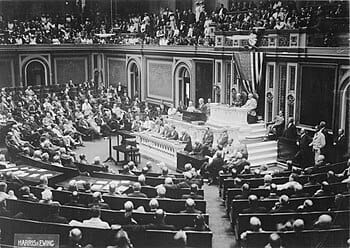
The 64th United States Congress
The United States House of Representatives voted down a proposed constitutional amendment that would have required states to grant women the right to vote. The proposal, introduced as part of the growing women's suffrage movement, fell short of the two-thirds majority needed for passage.
This rejection reflected the entrenched opposition many lawmakers had toward expanding voting rights to women, despite increasing public support and activism. However, suffragists continued their relentless campaign, organizing protests, lobbying, and demonstrations. Their efforts culminated in the eventual passage of the 19th Amendment in 1919, which was ratified in 1920, granting women the right to vote nationwide.
Notable Events:
1872: Yohannes IV crowned Emperor of Ethiopia in Axum.
1932: Hattie Caraway becomes the first woman elected to the U.S. Senate.
1969: The New York Jets defeat the Baltimore Colts to win Super Bowl III, commonly considered one of the greatest upsets in history.
January 13, 1966: Robert C. Weaver becomes the first African-American to be appointed to the U.S. cabinet.

Robert C. Weaver (left) shakes hands with President Lyndon B. Johnson
Robert C. Weaver made history as the first African American appointed to a U.S. Cabinet position, serving as the Secretary of Housing and Urban Development (HUD) under President Lyndon B. Johnson. Weaver, a Harvard-educated economist and civil rights advocate, had a long history of working to improve housing and economic opportunities for marginalized communities.
His appointment was a landmark moment in the fight for racial equality, symbolizing progress in integrating African Americans into high-ranking government roles. As HUD Secretary, Weaver played a crucial role in implementing policies aimed at urban renewal, affordable housing, and combating discrimination in housing practices.
Notable Events:
1888: The National Geographic Society is founded in Washington, DC.
1942: Henry Ford patents a soybean car, 30% lighter than a regular car at the time.
January 14, 1973: Elvis Presley’s Aloha from Hawaii becomes the most watched broadcast of all time by a single entertainer.
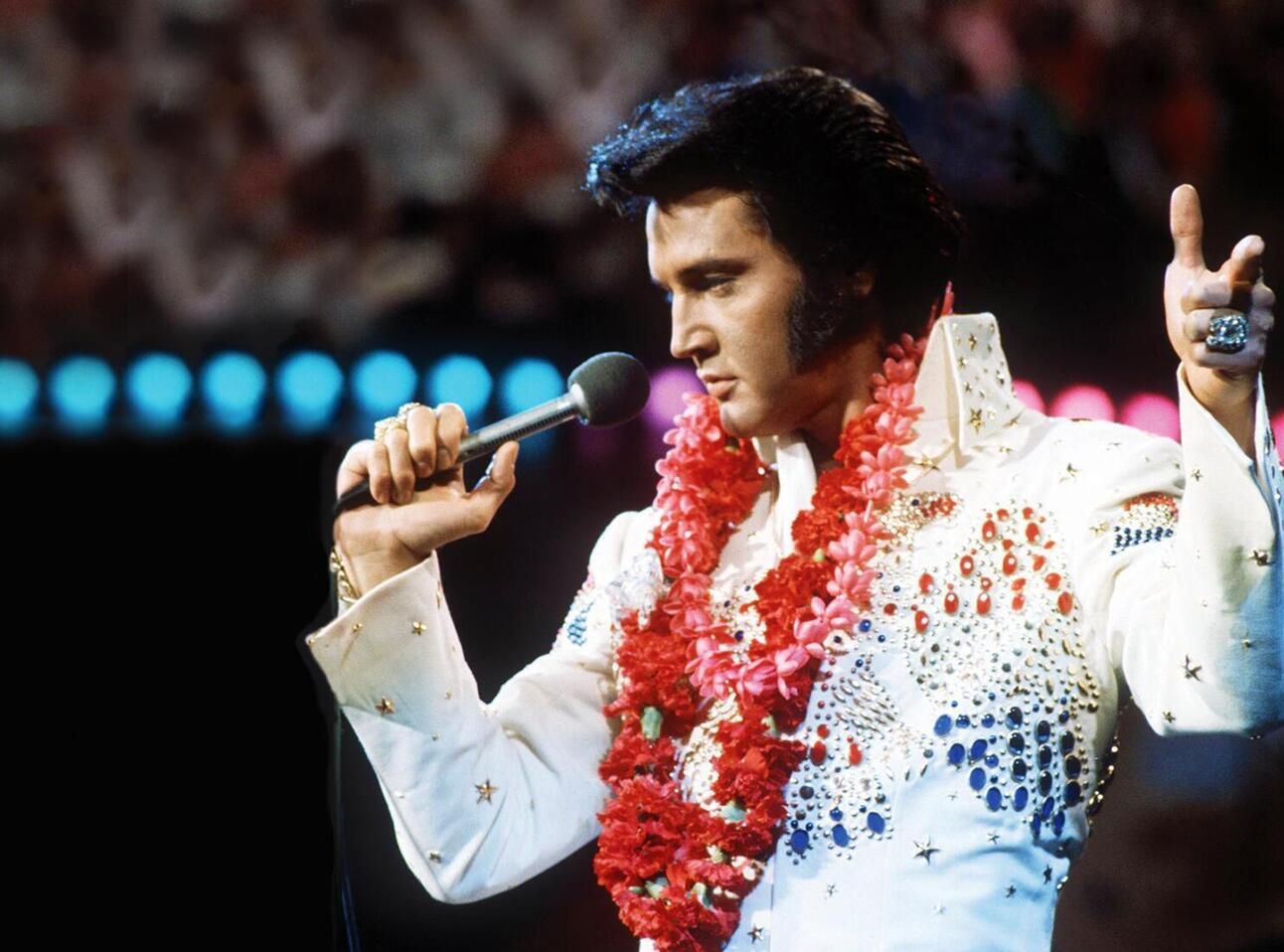
Still of Elvis Presley from the Aloha from Hawaii broadcast.
Elvis Presley's Aloha from Hawaii concert made television history as the first live concert broadcast globally via satellite. The performance, held in Honolulu, Hawaii, was viewed by an estimated 1.5 billion people across over 40 countries, setting a record as the most-watched broadcast by a single entertainer.
The concert showcased Elvis at the height of his popularity, performing hits like "Suspicious Minds" and "Burning Love." It also demonstrated the growing potential of satellite technology to connect global audiences in real time. Aloha from Hawaii remains a cultural milestone, cementing Elvis's status as the "King of Rock and Roll."
January 15, 1962: Europe’s oldest surviving manuscript is found.

The Derveni Papyrus, held in the Archeological Museum of Thessaloniki
The oldest surviving manuscript in Europe, named the “Derveni Papyrus”, was discovered in a burial site near Thessaloniki, northern Greece. Dating back to 340 BC, the charred scroll contains a philosophical and religious text interpreting an Orphic poem, offering insights into ancient Greek beliefs about the cosmos and the divine. This remarkable artifact, preserved by the heat of a funeral pyre, is a crucial link to understanding the intellectual and spiritual life of the ancient world, blending mysticism, theology, and early scientific thought.
Notable Events:
1559: Elizabeth I crowned Queen of England and Ireland.
1889: The Coca Cola Company is incorporated in Atlanta, Georgia.
1943: The Pentagon is completed and dedicated in Arlington, Virginia.
January 16, 1605: The first edition of world famous Don Quixote is published by Miguel de Cervantes in Madrid, Spain.

Painting depicting Don Quixote (left) and sidekick Sancho Panza (right)
The first edition of El ingenioso hidalgo Don Quijote de la Mancha by Miguel de Cervantes was published in Madrid, Spain. This groundbreaking novel, often regarded as one of the greatest works of world literature, tells the story of Don Quixote, a delusional nobleman inspired by chivalric romances, and his loyal squire, Sancho Panza.
Cervantes masterfully blends humor, satire, and profound commentary on idealism versus reality, creating a timeless exploration of human nature. The novel's innovative narrative style and complex characters laid the foundation for modern Western literature. Don Quixote quickly gained popularity and has since been translated into numerous languages, solidifying Cervantes’s legacy as one of history's most influential authors.
Notable Events:
1547: Grand Duke Ivan IV “The Terrible” becomes the first Tsar of Russia.
1909: Ernest Shackleton finds the magnetic South Pole.
1979: The last Shah flees Iran to Egypt during the Iranian Revolution.
Thank you for reading - see you next Friday!