- This Week in History
- Posts
- This Week in History #7
This Week in History #7
January 31, 2025 - February 6, 2025
Welcome to this week’s edition of This Week in History!
Sign up to receive this newsletter in your inbox every Friday @ 12PM EST.
January 31, 1961: NASA sends a chimpanzee into space

Ham the Chimpanzee pre-flight
As part of NASA’s Project Mercury, a chimpanzee named Ham became the first hominid to travel into space aboard the Mercury-Redstone 2 rocket. His 16-minute suborbital flight tested spacecraft systems and astronaut procedures, paving the way for human spaceflight. Ham’s mission was a success, proving that living beings could survive and function in space.
Notable Events:
2020: The UK’s membership to the EU ends after 47 years
2023: The last Boeing 747 is delivered.
Fact-based news without bias awaits. Make 1440 your choice today.
Overwhelmed by biased news? Cut through the clutter and get straight facts with your daily 1440 digest. From politics to sports, join millions who start their day informed.
February 1, 1865: Abraham Lincoln signs the 13th Amendment to the U.S. constitution, outlawing slavery

First reading of the Emancipation Proclamation before the Cabinet
President Abraham Lincoln signed the Thirteenth Amendment, which abolished slavery in the United States, marking a pivotal moment in American history. Though his signature was not legally required, it underscored his commitment to ending slavery. The amendment was later ratified by the states on December 6, 1865, officially becoming law.
Notable Events:
1796: Capital of Upper Canada is moved from Niagara-on-the-Lake to York (modern day Toronto)
1964: The Beatles have their first #1 hit in the United States.
2003: Space Shuttle Columbia disintegrated during the reentry into the Earth's atmosphere, killing all astronauts aboard.
February 2, 1913: Grand Central Terminal in NYC opens to the public

Grand Central Terminal in 1913
Grand Central Terminal, an iconic landmark in New York City, opened to the public at 12:01 a.m. on February 2, 1913, after nearly a decade of construction. Today, it stands as the world's largest train station by area, encompassing 49 acres, with 44 platforms and 67 tracks. The terminal serves approximately 750,000 visitors daily, including commuters and tourists.
Notable Events:
1536: Pedro de Mendoza founds Buenos Aires, Argentina.
1653: New Amsterdam (later renamed The City of New York) is incorporated.
1876: The National League of Professional Baseball Clubs of Major League Baseball is formed.
February 3, 1451: Mehmet II becomes Sultan of the Ottoman Empire

Sultan Mehmet II (on horseback) enters Constantinople
Sultan Mehmet II, also known as Mehmed the Conqueror, ascended to the Ottoman throne in 1451 at the age of 19, following the death of his father, Murat II. Just two years later, he achieved his most famous victory by capturing Constantinople in 1453, ending the Byzantine (Eastern Roman) Empire and transforming the city into the Ottoman capital, Istanbul. His reign was marked by military expansion, legal and administrative reforms, and cultural advancements. He continued to extend Ottoman rule into the Balkans and Anatolia, establishing the empire as a dominant power in both Europe and Asia.
Notable Events:
1690: Massachusetts issues the first paper money in the Americas.
1870: The 15th Amendment to the U.S. constitution is ratified, guaranteeing voting rights to male citizens regardless of race.
1989: Alfredo Stroessner, dictator of Paraguay since 1954, is overthrown.
February 4, 2004: Social media platform Facebook is founded

Mark Zuckerberg (centre) at the Facebook initial public offering (IPO)
Facebook was founded on February 4, 2004, by Mark Zuckerberg and Eduardo Saverin as a Harvard-exclusive social networking site before rapidly expanding to other universities and eventually the global public. It revolutionized online communication, social interactions, and digital marketing, becoming one of the most influential technology companies in the world.
Facebook played a key role in shaping modern social media culture, influencing political movements, news consumption, and personal connectivity on a massive scale. Its impact extends beyond social networking, driving innovations in artificial intelligence, virtual reality, and the broader tech industry, while also sparking debates on data privacy, misinformation, and digital ethics.
Notable Events:
1789: George Washington is unanimously elected as the 1st President of the United States by the U.S. Electoral College.
1846: The first Mormon pioneers make their exodus from Illinois, westward towards Salt Lake Valley.
February 5, 1852: The Hermitage Museum opens to the public in St. Petersburg
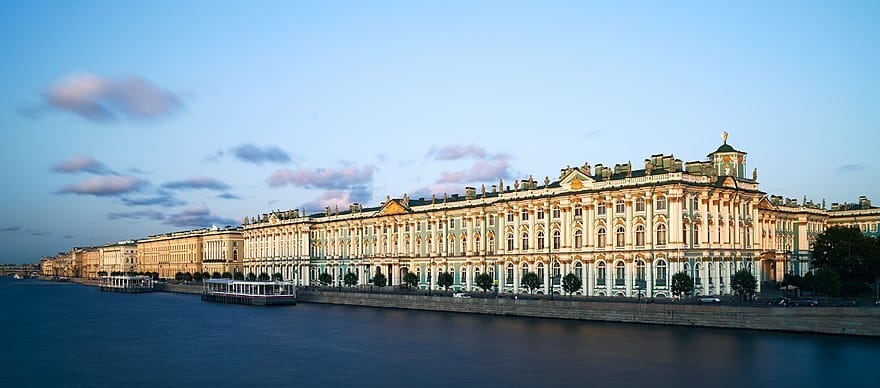
The Hermitage Museum
The New Hermitage Museum in Saint Petersburg, Russia, opened to the public in 1852, marking a significant expansion of the imperial art collection originally established by Catherine the Great in the 18th century. Today, the Hermitage is one of the largest and most prestigious museums in the world, housing over three million artifacts, including paintings, sculptures, and historical objects.
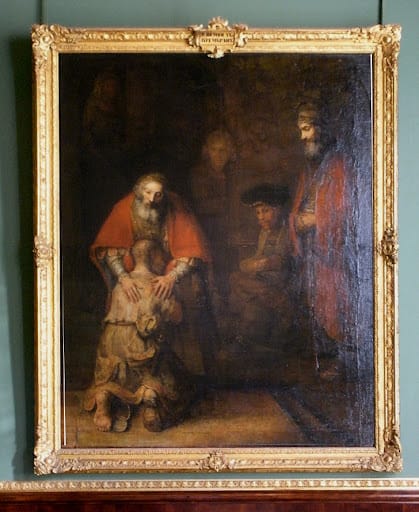
The Return of the Prodigal Son by Dutch Painter Rembrandt Harmenszoon van Rijn
The museum’s vast collection includes masterpieces such as The Return of the Prodigal Son by Rembrandt, The Madonna Litta attributed to Leonardo da Vinci, and Danaë by Titian. It also boasts works by Raphael, Michelangelo, Caravaggio, and Van Gogh, making it a treasure trove of Western European art. Beyond paintings, the Hermitage showcases an extensive collection of Egyptian antiquities, classical Greek and Roman sculptures, and decorative arts. Its cultural influence extends globally, preserving and displaying some of the finest artworks from various civilizations and historical periods.
Notable Events:
1885: King Leopold II of Belgium establishes the Congo as a personal possession.
1917: The current constitution of Mexico is adopted, establishing a federal republic with powers separated into independent executive, legislative, and judicial branches.
1962: French President Charles de Gaulle calls for Algeria to be granted independence.
February 6, 1952: Elizabeth II becomes Queen of the United Kingdom and other commonwealth realms, marking the first day of her 70 year reign

Elizabeth II with her husband, Prince Phillip at her coronation in 1953
Elizabeth II became Queen of the United Kingdom and other commonwealth realms on February 6, 1952, while on a royal tour in Kenya, marking the beginning of a historic reign that lasted over 70 years. As the longest-serving British monarch, she oversaw immense political and social change, including the decolonization of Africa and the Caribbean, the Cold War, and the evolution of the modern Commonwealth.
Her reign was defined by a strong sense of duty, stability, and adaptability, making her a widely respected global figure. Her legacy includes modernizing the monarchy, strengthening the Commonwealth, and maintaining public trust in the British royal family through decades of transformation.
Notable Events:
1579: The Catholic Diocese of Manila is established.
1951: The Canadian Army enters combat in the Korean War.
2006: Stephen Harper becomes Prime Minister of Canada.
Thank you for reading - see you next Friday!