- This Week in History
- Posts
- This Week in History #5
This Week in History #5
January 17, 2025 - January 23, 2025
Welcome to this week’s edition of This Week in History!
Sign up to receive this newsletter in your inbox every Friday @ 12PM EST.
January 17, 1961: President Eisenhower gives farewell address, warning Americans about the military - industrial complex

President Eisenhower during the televised speech (right) and copy of his speech with annotations (left)
Highlighting his unique perspectives as a general turned president, U.S. President Dwight D. Eisenhower delivered a historic televised farewell address, cautioning Americans about the potential dangers of the "military–industrial complex." He referred to the growing influence of the defense industry and its close relationship with the government, warning that unchecked power could threaten democratic processes and freedoms. Eisenhower also expressed concerns about the risks of excessive government spending, particularly deficit spending, which could compromise future generations. His address remains a significant and frequently cited commentary on the balance between national security and democratic governance.
Notable Events:
1524: Giovanni da Verrazzano sets sail westward from Madeira to find a sea route to the Pacific Ocean.
1773: James Cook leads the first expedition to sail south of the Antarctic Circle.
1920: Alcohol Prohibition begins in the United States.
This week’s edition of This Week in History is brought to you in partnership with Rundown AI.
Learn how to make AI work for you
AI won’t take your job, but a person using AI might. That’s why 1,000,000+ professionals read The Rundown AI – the free newsletter that keeps you updated on the latest AI news and teaches you how to use it in just 5 minutes a day.
January 18, 1778: James Cook becomes the first European to discover the Hawaiian islands
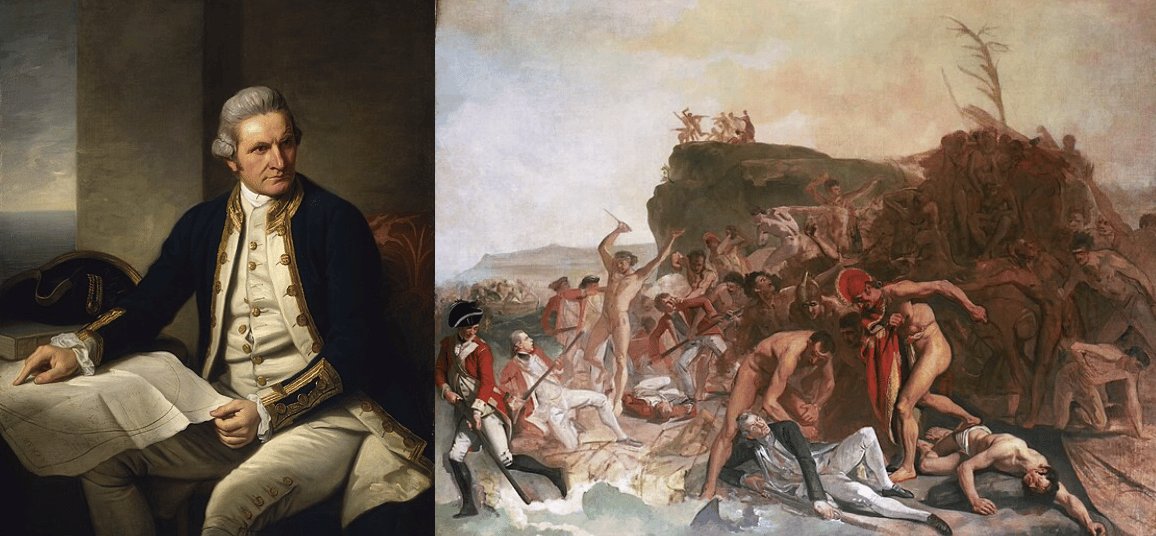
Captain James Cook (left), Death of Captain James Cook in Hawaii (right)
British explorer Captain James Cook became the first known European to reach the Hawaiian Islands during his third voyage of exploration in the Pacific. He named the islands the "Sandwich Islands" in honor of John Montagu, the 4th Earl of Sandwich, who was a sponsor of Cook's expedition. Cook's arrival marked the beginning of increased contact between Hawaiians and Europeans, which would significantly impact the islands' culture and society. While Cook's initial encounters with the Hawaiians were generally amicable, tensions arose during subsequent visits, ultimately leading to his death in Hawaii in 1779.
Notable Events:
474: Seven-year-old Leo II succeeds his maternal grandfather Leo I as Byzantine emperor.
1806: Jan Willem Janssens surrenders the Dutch Cape Colony (modern day South Africa) to the British.
1919: The Paris Peace Conference, which eventually leads to the end of World War I, opens in Versailles, France.
January 19, 1981: The Iran Hostage crisis ends, 52 American hostages are released

Iranians storm the U.S. embassy (left), front page of the New York Times on the day of their release (right)
The Iran Hostage Crisis began on November 4, 1979, when Iranian revolutionaries stormed the U.S. Embassy in Tehran and took 66 Americans hostage, protesting U.S. support for the deposed Shah of Iran. Over time, 14 hostages were released, but 52 remained in captivity for 444 days. The crisis symbolized deep tensions between the U.S. and the newly established Islamic Republic of Iran.
On January 19, 1981, U.S. and Iranian officials signed the Algiers Accords, which secured the hostages' release in exchange for unfreezing Iranian assets and commitments to avoid future interference in Iran's internal affairs. The hostages were freed the next day, coinciding with Ronald Reagan's inauguration as U.S. president.
Notable Events:
1953: 72% of all television sets in the United States are tuned into I Love Lucy to watch Lucy give birth.
1978: The last Volkswagen Beetle made in Germany leaves VW's plant in Emden. Beetle production in Latin America continues until 2003.
2024: Japan becomes 5th country to land on the moon.
January 20, 2009: Barack Obama becomes the first African-American President of the United States
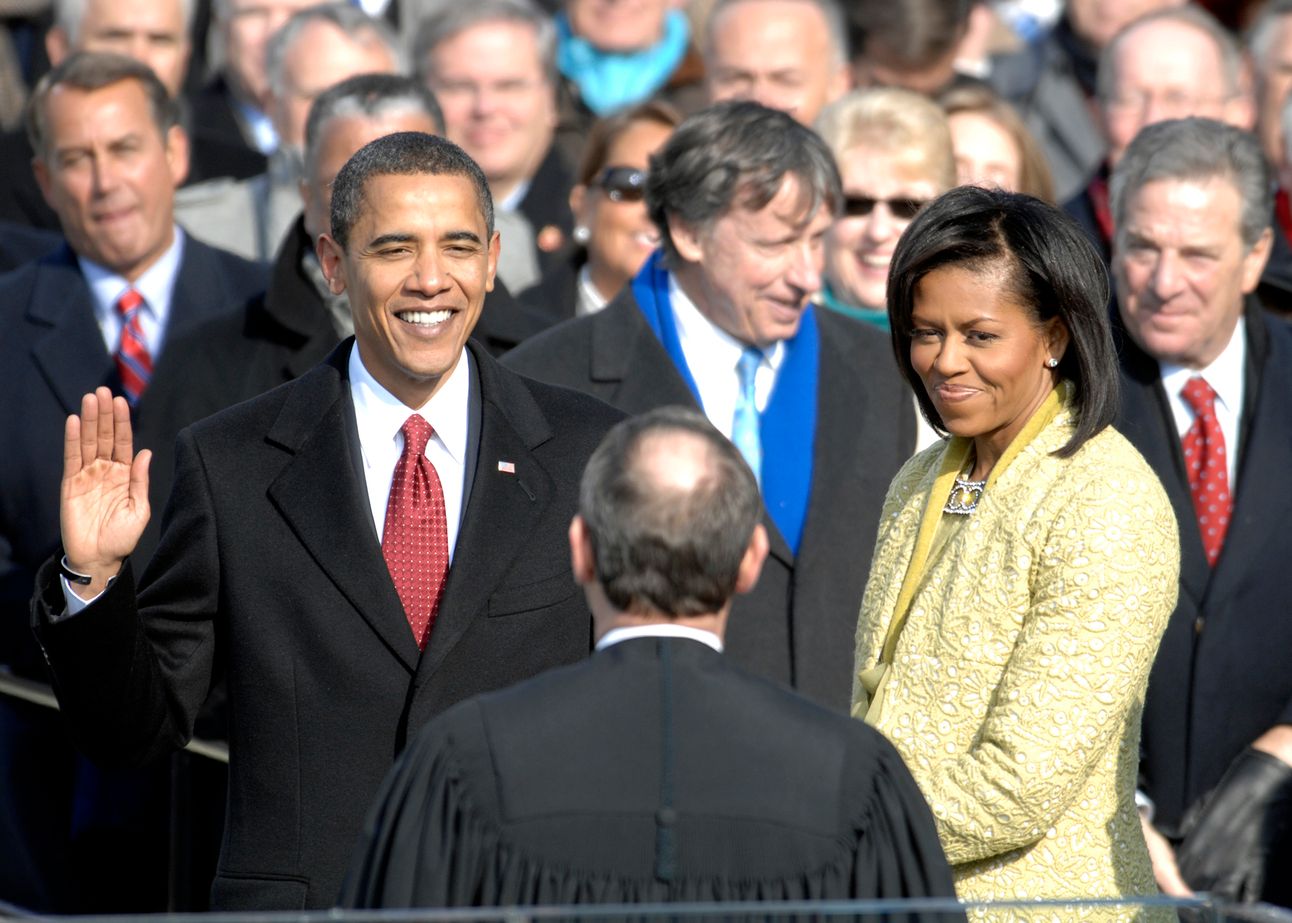
Barack Obama takes the oath of office, becoming 44th U.S. President.
Barack Obama was inaugurated as the 44th President of the United States, making history as the first African-American to hold the office. His presidency marked a significant milestone in American history, being celebrated globally as a powerful moment of hope and change.
Notable Events:
1265: The first English parliament to include not only Lords but also representatives of the major towns holds its first meeting in the Palace of Westminster, now commonly known as the "Houses of Parliament".
1887: The United States Senate allows the Navy to lease Pearl Harbor as a naval base.
2017: Donald Trump is inaugurated as the 45th President of the United States of America.
January 21, 1911: The first Monte Carlo Rally takes place

Dani Sordo and co-driver Marc Martí in their Hyundai i20 WRC at the 2015 Rally.
Organized by the Automobile Club de Monaco to promote the Principality of Monaco as a winter tourism destination, the Monte Carlo Rally is a race where drivers and co-drivers navigate public or private roads in timed stages, competing to achieve the fastest time.
Participants set off from different European cities, converging in Monte Carlo after navigating challenging roads and weather conditions. The event became a cornerstone of motorsport history, eventually evolving into a prestigious and iconic rally in the World Rally Championship.
January 22, 1808: The Portuguese Royal Family arrives in Brazil, temporarily relocating the empire’s capital from Lisbon to Rio de Janeiro

Embarkation of the Portuguese Royal family to Brazil
The Portuguese royal family, led by Prince Regent João (later King João VI), arrived in Brazil, fleeing Napoleon's invasion of Portugal. This marked a pivotal moment in Brazilian history, as the monarchy's presence elevated Brazil's status within the Portuguese Empire. The royal court established Rio de Janeiro as the capital, fostering economic growth and cultural development. This relocation eventually set the stage for Brazil’s independence in 1822, as the colony experienced a period of political and economic transformation under direct royal governance.
Notable Events:
1506: The first group of 150 Swiss Guards arrives at the Vatican.
1968: Apollo 5 lifts off carrying the first Lunar module into space.
1970: The Boeing 747, the world's first "jumbo jet", enters commercial service.
January 23, 1986: The Rock & Roll Hall of Fame inducts its first members

The Rock and Roll Hall of Fame in Cleveland, Ohio, USA
The Rock and Roll Hall of Fame held its inaugural induction ceremony, honouring ten legendary artists who shaped the foundation of rock and roll. The inductees included trailblazers like Chuck Berry and Little Richard, whose pioneering styles defined the genre's sound and energy, and Elvis Presley, celebrated as the "King of Rock and Roll."
Other honorees, such as Ray Charles and James Brown, brought elements of soul and rhythm and blues to the genre, influencing countless musicians. The event marked the beginning of an institution dedicated to preserving the history and cultural impact of rock and roll.
Notable Events:
1556: The deadliest earthquake in history, the Shaanxi earthquake, hits Shaanxi province, China with death toll over 800,000.
1719: The Principality of Liechtenstein is created within the Holy Roman Empire.
1849: Elizabeth Blackwell is awarded her M.D. by the Geneva Medical College of New York, becoming the United States' first female doctor.
Thank you for reading - see you next Friday!