- This Week in History
- Posts
- This Week in History #8
This Week in History #8
February 7, 2025 - February 13, 2025
Welcome to this week’s edition of This Week in History!
Sign up to receive this newsletter in your inbox every Friday @ 12PM EST.
February 7, 1964: The Beatles arrive in the U.S. for the first time.

The Beatles arrive at JFK International Airport.
Their arrival in the U.S. sparked "Beatlemania," with thousands of screaming fans greeting them at the airport. Just two days later, they made their iconic debut on The Ed Sullivan Show, drawing a record-breaking television audience.
Notable Events:
457: Leo I becomes the Eastern Roman emperor.
1795: The 11th Amendment to the United States Constitution is ratified.
1900: A Chinese immigrant in San Francisco falls ill to bubonic plague in the first plague epidemic in the continental US.
Fact-based news without bias awaits. Make 1440 your choice today.
Overwhelmed by biased news? Cut through the clutter and get straight facts with your daily 1440 digest. From politics to sports, join millions who start their day informed.
February 8, 1960: The Hollywood Walk of Fame is founded.

The Hollywood Walk of Fame
The Hollywood Walk of Fame was established to honor notable figures in the entertainment industry, with the first star unveiled for director Stanley Kramer. Located along Hollywood Boulevard and Vine Street, it has since grown to feature over 2,700 stars. The Walk remains a major tourist attraction, celebrating achievements in film, television, music, radio, and theater.
Notable Events:
1946: The People's Republic of Korea is dissolved in the North and replaced by the communist-controlled Provisional People's Committee of North Korea.
1971: The NASDAQ stock market index opens for the first time.
February 9, 1986: Most recent entry of Halley’s Comet into the solar system.

Halley’s Comet as seen from Earth.
Halley's Comet, which orbits the Sun approximately every 76 years, was last visible from Earth in 1986, when spacecraft the first close-up images of its nucleus. The comet's return is predicted for 2061, when it will once again be visible to the naked eye. Throughout history, its appearances have been recorded for over two millennia, often linked to significant historical events and omens.
Notable Events:
1822: Haiti attacks the newly established Dominican Republic on the other side of the island of Hispaniola.
1942: Year-round Daylight saving time is reinstated in the United States as a wartime measure to help conserve energy resources.
February 10, 1996: IBM’s Deep Blue computer beats world chess champion for the first time.

Gary Kasparov plays chess against IBM Deep Blue.
IBM’s Deep Blue became the first computer to defeat a world chess champion, Garry Kasparov, in a single game under standard tournament conditions. However, Kasparov ultimately won the six-game match 4–2, proving human intuition still had the edge. Deep Blue was later upgraded and, in a historic rematch in 1997, defeated Kasparov in a full match, marking a turning point in artificial intelligence.
Notable Events:
1258: The Siege of Baghdad ends with the surrender of the last Abbasid caliph to Hulegu Khan, a prince of the Mongol Empire.
1840: Queen Victoria of the United Kingdom marries Prince Albert of Saxe-Coburg-Gotha.
1972: Ras Al Khaimah becomes the 7th emirate of the United Arab Emirates.
February 11, 1990: Nelson Mandela is released from prison after 27 years.
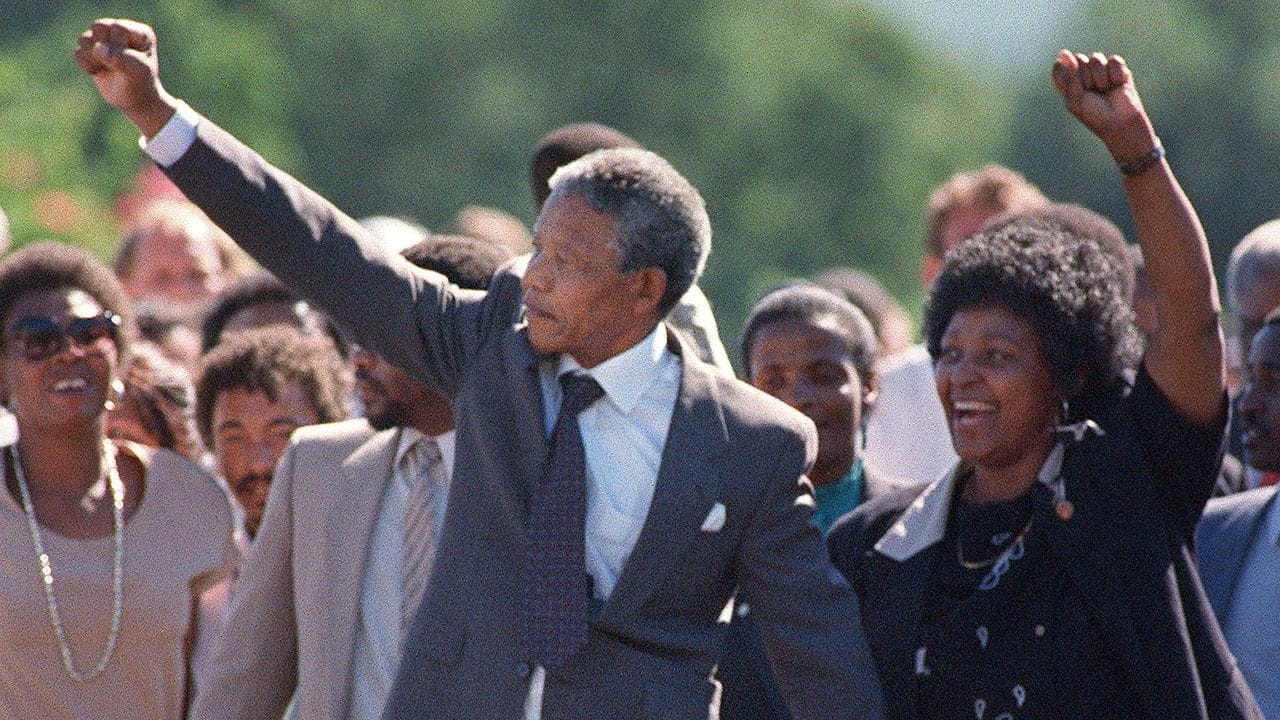
Nelson Mandela walks out of prison
Nelson Mandela walked free from Victor Verster Prison, marking the beginning of the end of apartheid in South Africa. His release, ordered by President F.W. de Klerk, followed years of domestic resistance and international pressure against the apartheid regime. Mandela's freedom was a pivotal moment in the nation's history, leading to negotiations that resulted in the first multiracial elections in 1994. He later became South Africa’s first Black president, symbolizing reconciliation and the triumph of democracy over racial oppression.
Notable Events:
660 BC: Japan is founded by Emperor Jimmu.
1826: University College London is founded as University of London.
1990: Buster Douglas, a 42:1 underdog, knocks out Mike Tyson.
February 12, 1502: Vasco de Gama embarks on his second voyage to India, after finding the first sea route from Europe to the subcontinent.
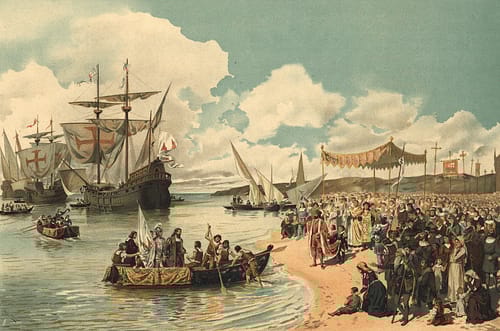
Vasco de Gama leaves Lisbon.
Vasco da Gama embarked on his second voyage to India, leading a heavily armed fleet to secure Portuguese dominance in the Indian Ocean trade. Unlike his first journey, where he found a sea route from Europe to India, this expedition was more focused on military force, as he sought to subdue resistance from local rulers and rival traders. Upon reaching India, he used aggressive tactics, including bombarding Calicut, to establish Portuguese influence. His actions laid the foundation for Portugal’s colonial empire in Asia, controlling key trade routes for the next century.
Notable Events:
1541: Santiago, Chile is founded by Pedro de Valdivia.
1832: Ecuador annexes the Galápagos Islands.
1963: Construction begins on the Gateway Arch in St. Louis, Missouri.
February 13, 1990: A plan for German Unification is agreed upon by East and West German leaders.

The Berlin Wall, separat
East and West German leaders, along with international allies, agreed on a two-stage process to reunify Germany after more than four decades of division. The plan involved free elections in East Germany, followed by economic and monetary union, ultimately leading to full political reunification. This agreement set the stage for the official reunification on October 3, 1990, ending the Cold War-era separation imposed after World War II. The reunification transformed Germany into Europe's largest economy but also brought significant challenges in integrating the two vastly different societies.
Notable Events:
1913: The 13th Dalai Lama proclaims Tibetan independence following a period of domination by China.
1931: The British Raj (modern day India) completes its capital transfer from Calcutta to New Delhi.
2008: Australian Prime Minister Kevin Rudd makes a historic apology to the Indigenous Australians.
Thank you for reading - see you next Friday!