- This Week in History
- Posts
- This Week in History #11
This Week in History #11
February 28, 2025 - March 6, 2025
Welcome to this week’s edition of This Week in History!
Sign up to receive this newsletter in your inbox every Friday @ 12PM EST.
February 28, 2013: Pope Benedict XVI resigns the papacy

Pope Benedict XVI
Pope Benedict XVI's resignation was unprecedented in modern times, as most popes serve until death. Citing age and declining strength, he became the first pope in nearly 600 years to step down voluntarily. His decision led to the election of Pope Francis, the first Jesuit and Latin American pope, marking a significant shift in the Church’s leadership.
March 1, 1872: Yellowstone is established as world’s first national park

Geyser in Yellowstone National Park
Yellowstone National Park was established by the U.S. Congress and signed into law by President Ulysses S. Grant, making it the first national park in the world. Spanning parts of Wyoming, Montana, and Idaho, the park is known for its geothermal features like Old Faithful and diverse wildlife. Its creation set a global precedent for conservation and the protection of natural landscapes.
March 2, 1855: Alexander II becomes Tsar of Russia

Portrait of Alexander II, Tsar of Russia
Alexander II became Tsar of Russia following the death of his father, Nicholas I, during the Crimean War. Known as the "Tsar Liberator," he implemented major reforms, including the emancipation of the serfs in 1861, which freed millions from bondage. His reign was marked by modernization efforts but ended with his assassination in 1881 by radical revolutionaries.
March 3, 1924: The Ottoman Caliphate is abolished, paving the way for the modern Republic of Turkey
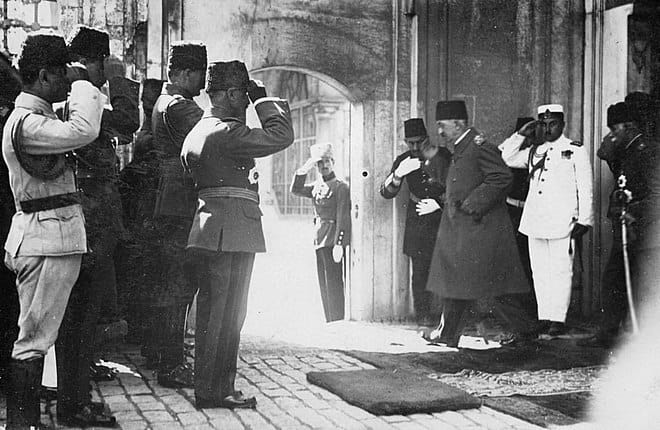
Caliph Mehmed IV exists the palace through the back door
Mustafa Kemal Atatürk (later 1st President of the Turkish Republic) officially abolished the Ottoman Caliphate, ending over 1,300 years of Islamic leadership. Caliph Abdülmecid II was deposed and exiled, marking the final dismantling of the Ottoman monarchy. This move was part of Atatürk’s broader reforms to secularize and modernize Turkey, transforming it into a republic.
March 4, 1519: Conquistador Hernán Cortés arrives in Mexico in search of the Aztec
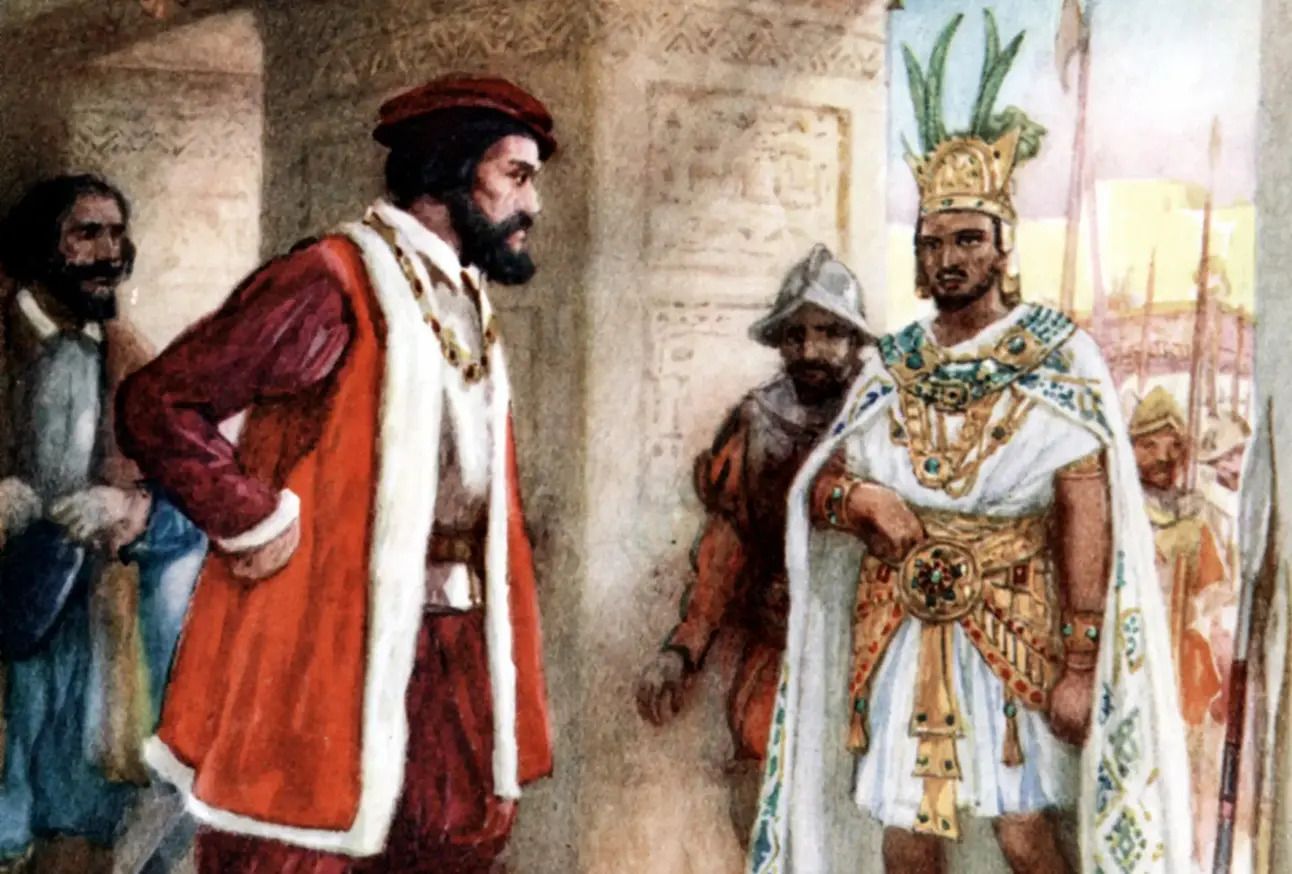
Hernán Cortés meets with Moctezuma, Emperor of the Aztec
Hernán Cortés landed on the coast of present-day Mexico with a small expedition, seeking to conquer the wealthy Aztec Empire. Despite being vastly outnumbered, he forged alliances with local indigenous groups who opposed Aztec rule. His arrival marked the beginning of Spain’s conquest of Mexico, culminating in the fall of Tenochtitlán (modern day Mexico City) in 1521.
March 5, 1953: Joseph Stalin, leader of the Soviet Union, dies

Portrait of Joseph Stalin set against the flag of the USSR
Joseph Stalin died at his Volynskoe dacha near Moscow after suffering a cerebral hemorrhage. His death ended nearly three decades of authoritarian rule, during which he led the Soviet Union through industrialization, World War II, and the early Cold War. His passing triggered a power struggle, eventually leading to Nikita Khrushchev's rise and the de-Stalinization policies that followed.
March 6, 1834: York, Upper Canada is incorporated as Toronto

Modern day skyline of Toronto, Canada
The town of York in Upper Canada was officially incorporated as the city of Toronto. The name change reflected the city's growth and its aspiration to become a major economic and political center. Today, Toronto is Canada’s largest city and a global hub for finance, culture, and innovation.
Thank you for reading - see you next Friday!